
Articles
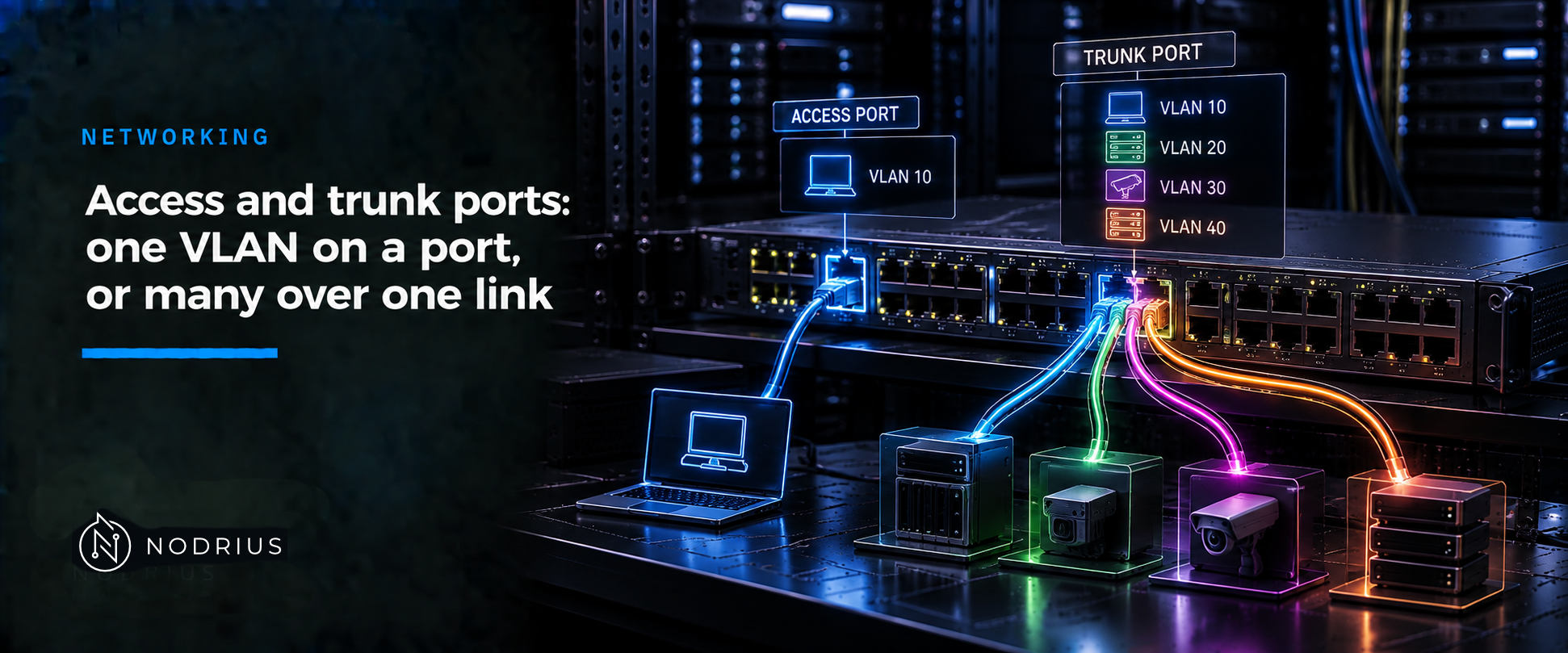
Access and trunk ports: one VLAN on a port, or many over one link
What an access port and a trunk port each carry, how untagged and IEEE 802.1Q-tagged traffic differ on a trunk, and how to configure and verify both on Cisco IOS XE.
Protocols, routing, VLANs and network infrastructure.
What an access port and a trunk port each carry, how untagged and IEEE 802.1Q-tagged traffic differ on a trunk, and how to configure and verify both on Cisco IOS XE.
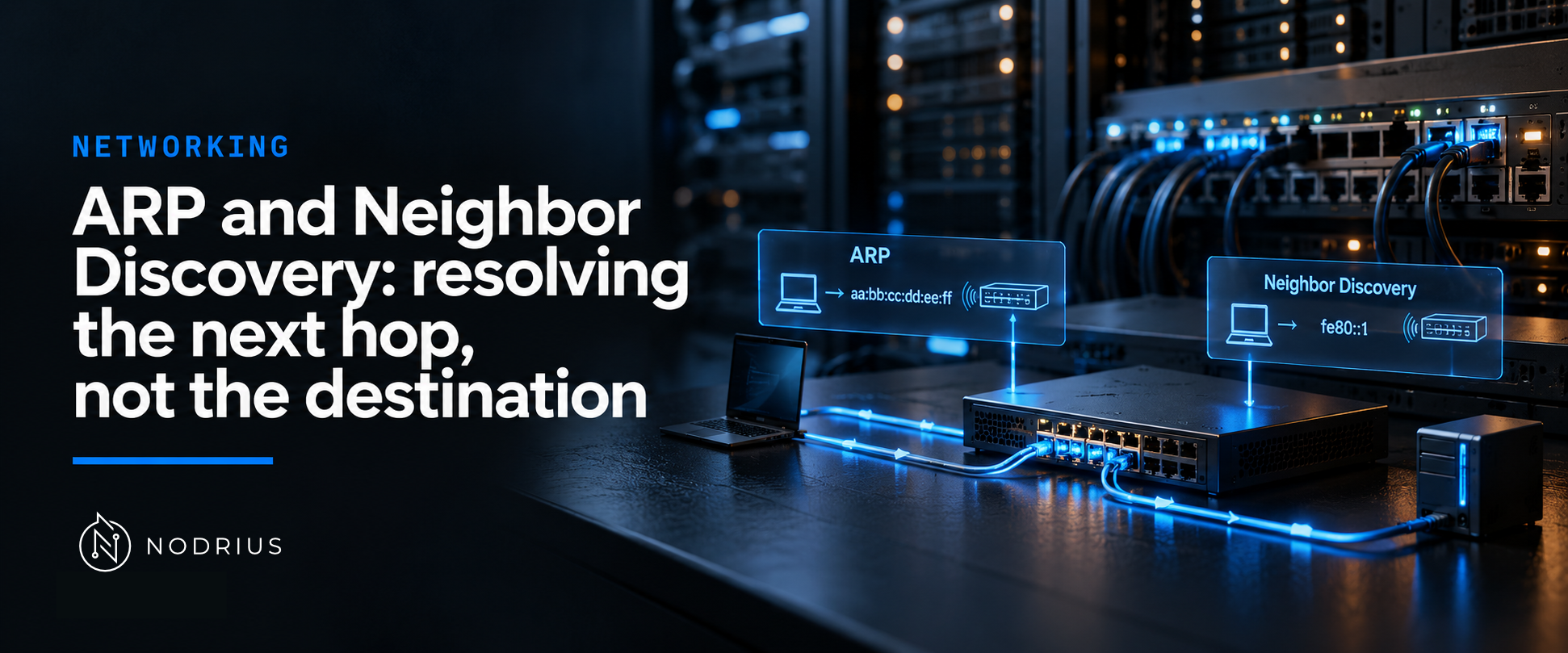
Why IPv4 ARP and IPv6 Neighbor Discovery map a layer-3 address to a layer-2 address on the local link, what each protocol actually does, and where their trust model breaks.
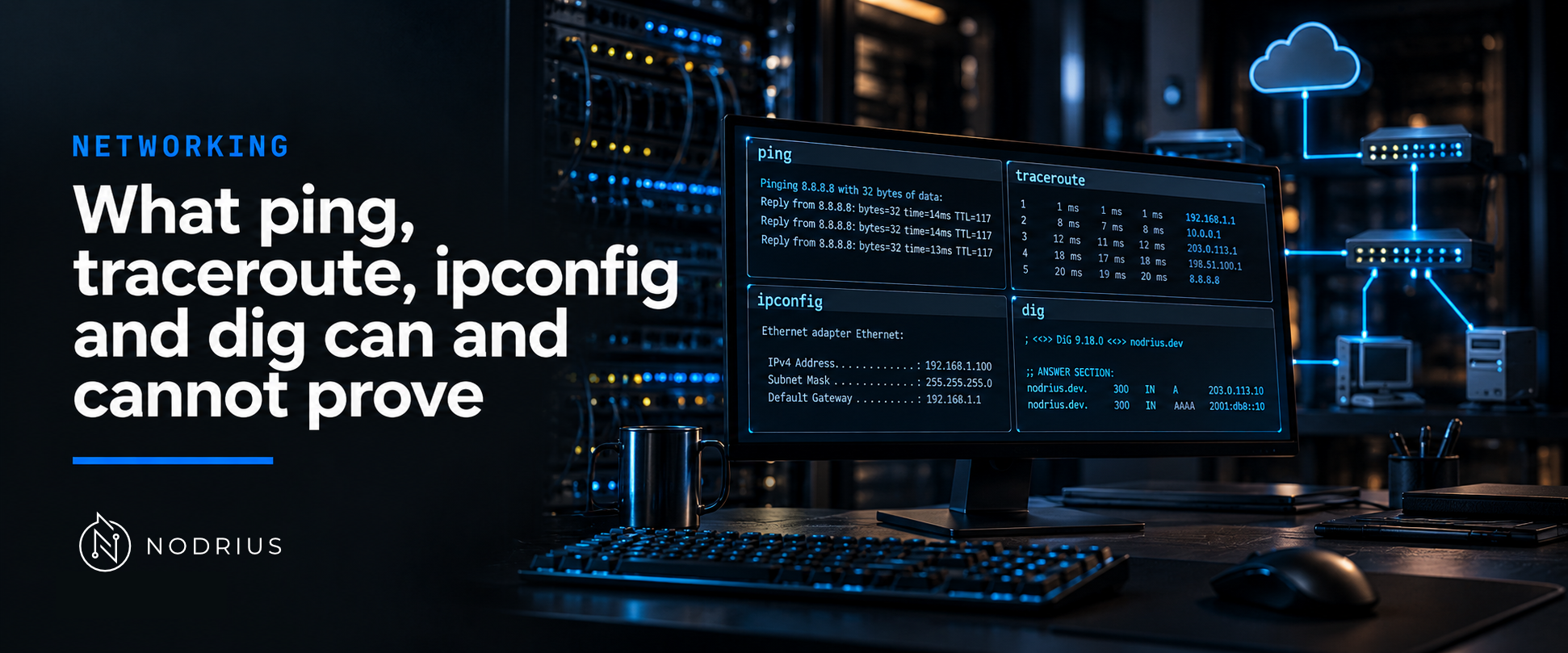
What each basic network tool really answers, how to read its result, and the conclusions it does not support.
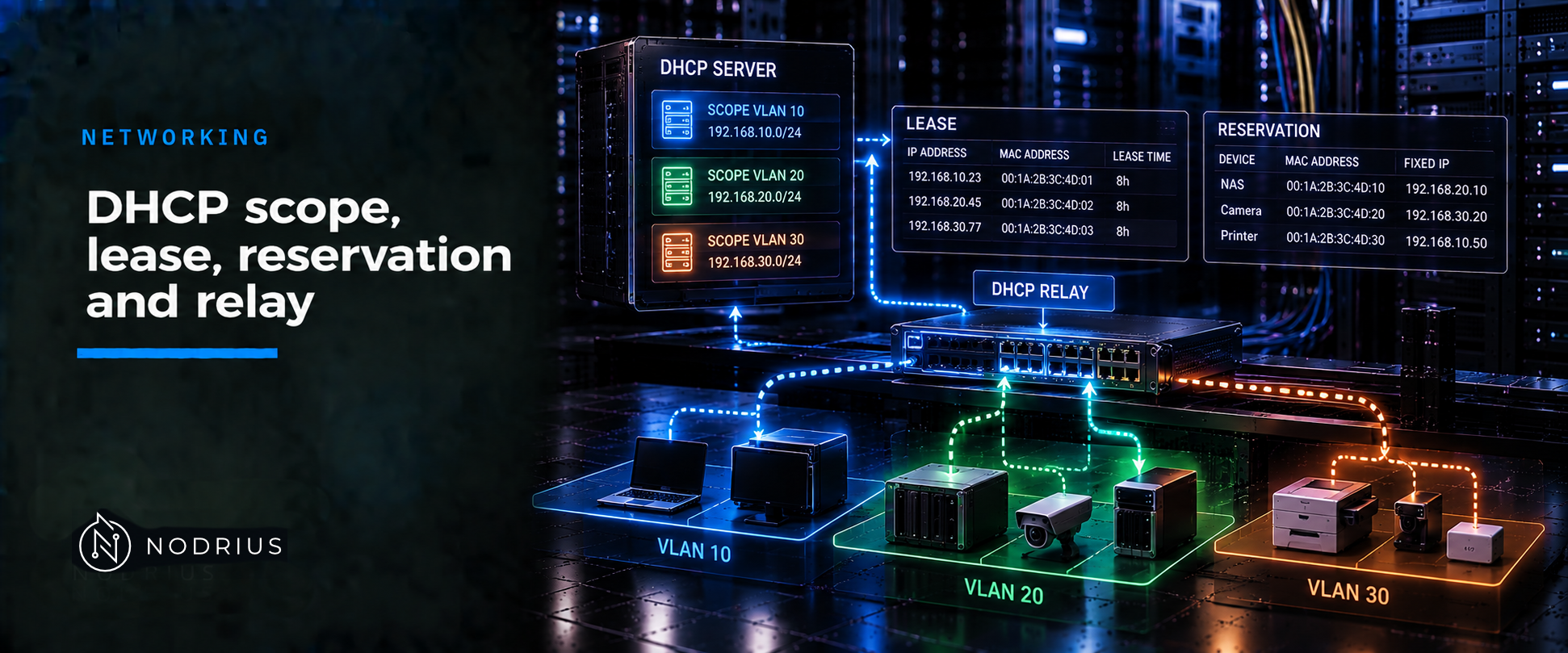
How a DHCP server is scoped to a subnet, how leases and reservations decide which address a client gets, and how a relay agent lets one server serve other segments.
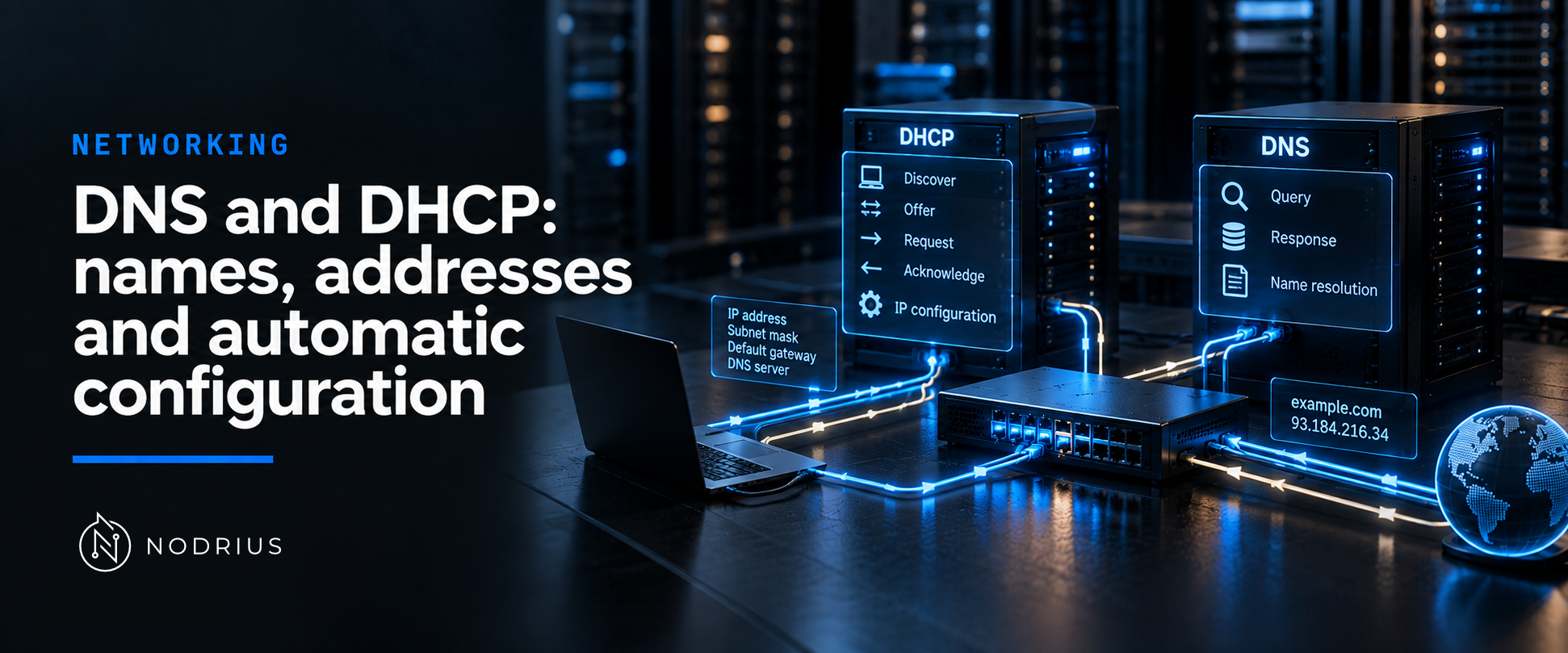
What DNS and DHCP each solve, how resolution and address assignment actually work, and why both are unauthenticated by default.
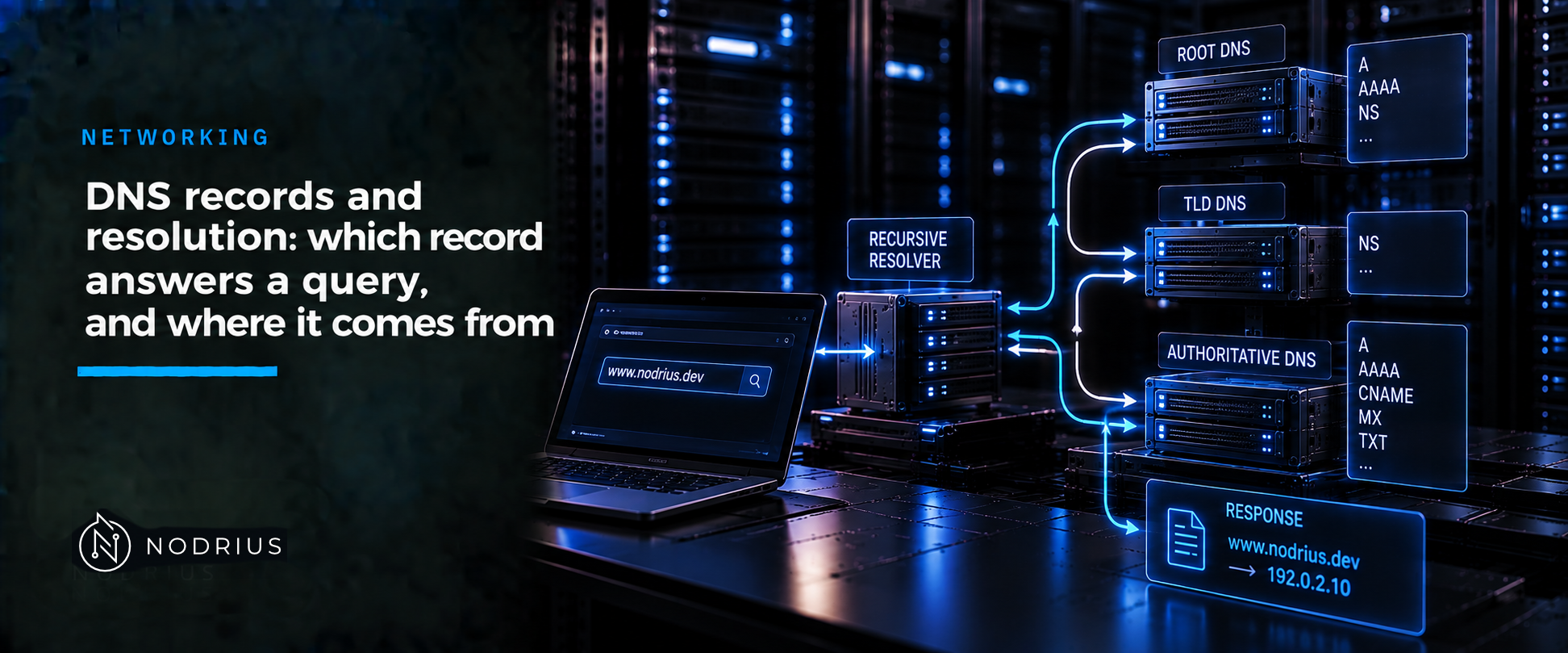
How the common DNS record types answer different questions, how a resolver walks the delegations to the authoritative server that owns a name, and how a Cisco IOS-XE device resolves and serves names.
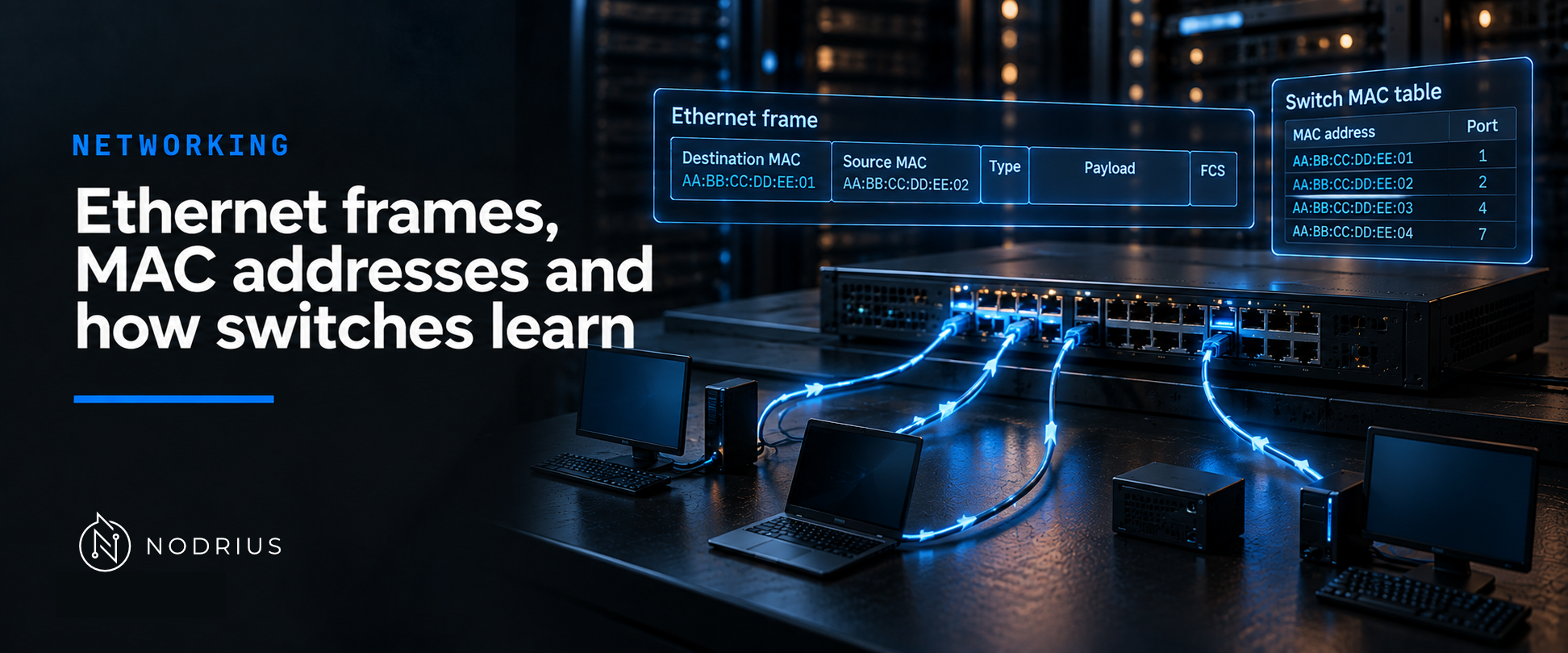
What an Ethernet frame carries, what a MAC address identifies, and how a switch builds the table it forwards from.
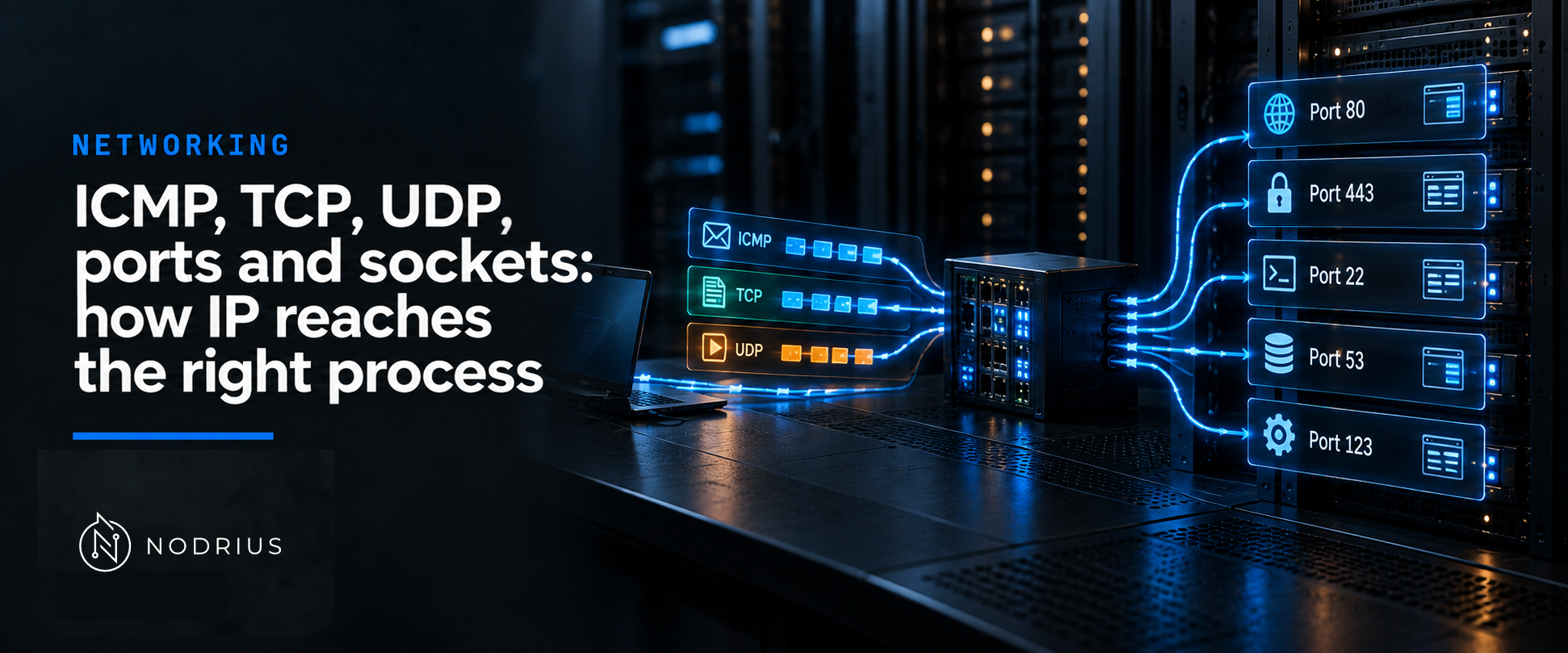
What ICMP does inside IP, how TCP and UDP differ, and why a port identifies a process rather than a trusted service.
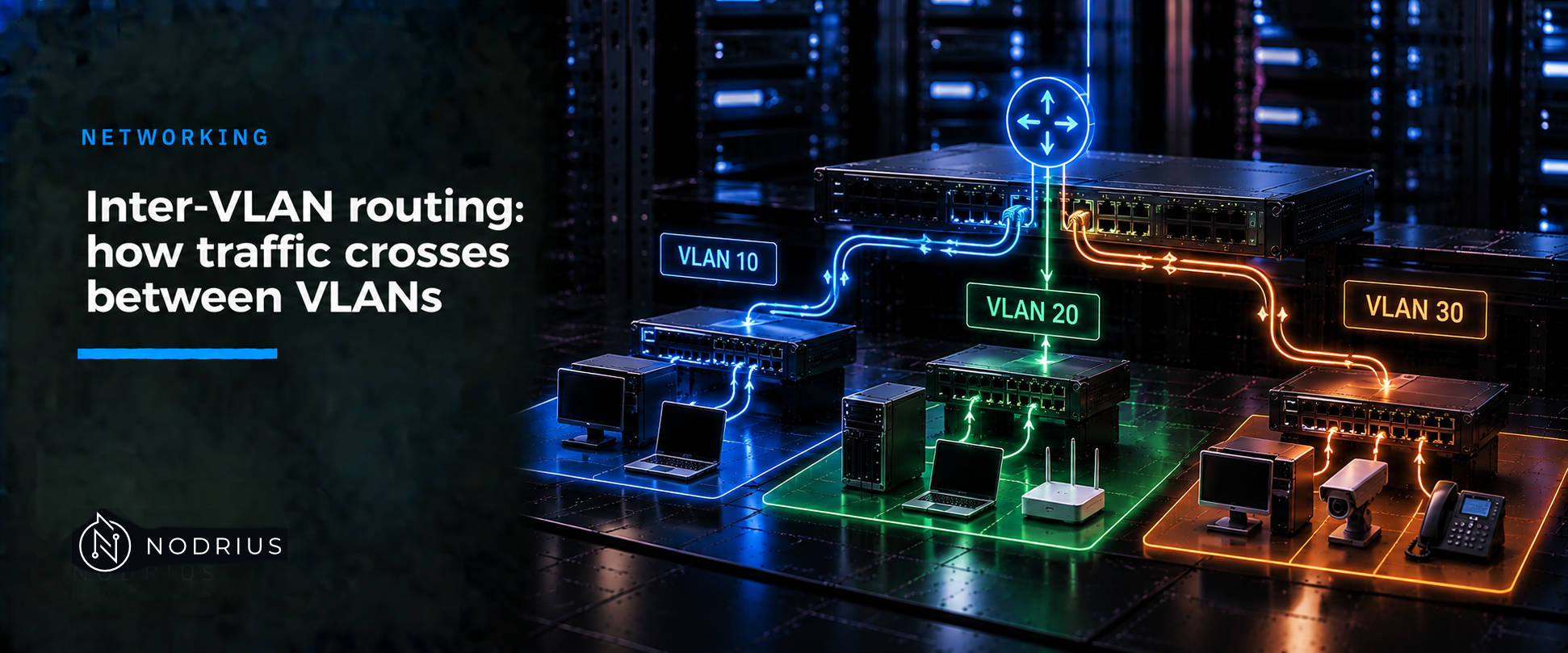
Why two VLANs cannot reach each other at Layer 2, and how one Layer-3 interface per VLAN — a router subinterface or a switch SVI — routes traffic between them.
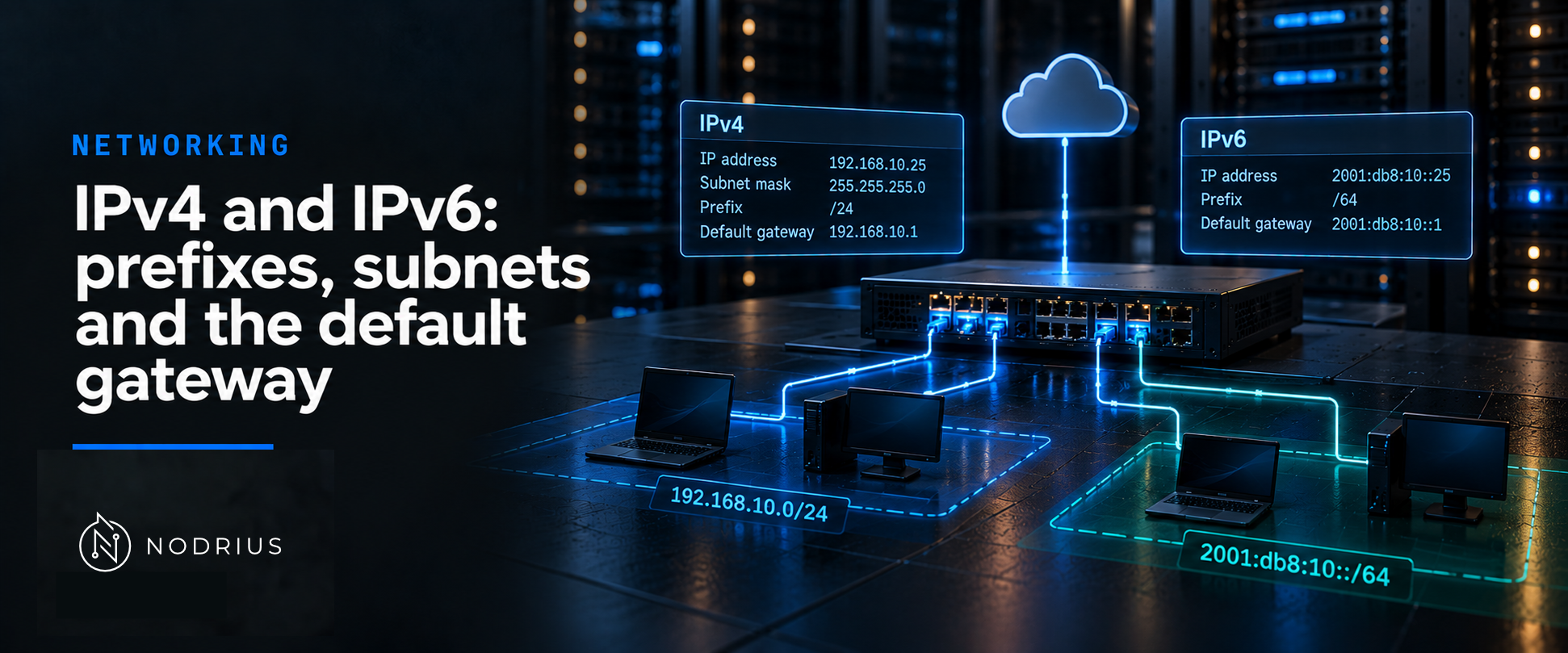
How an address splits into a prefix and a host part, why a prefix boundary can fall inside an octet, and what the default gateway actually does in IPv4 and IPv6.
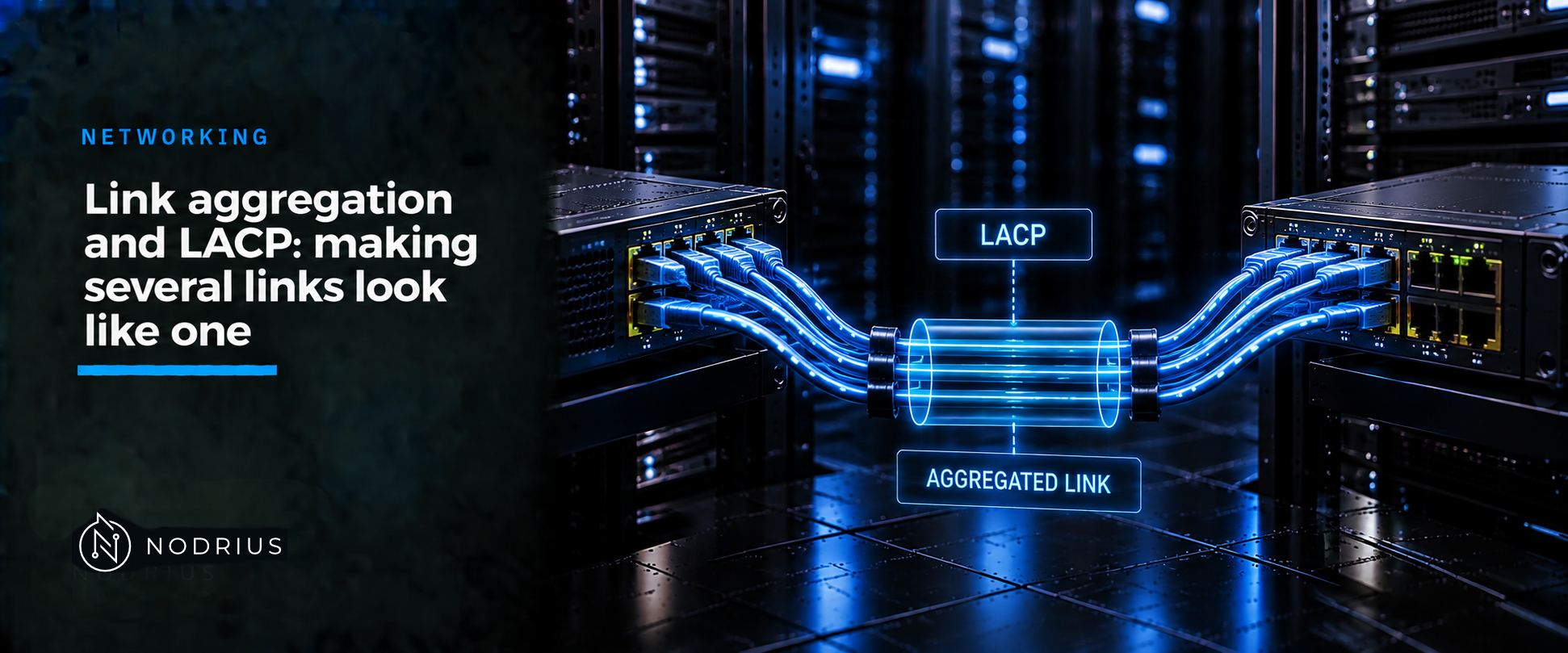
How link aggregation bundles parallel links into one logical interface, what LACP negotiates before the bundle is used, and why one flow still moves at one link speed.
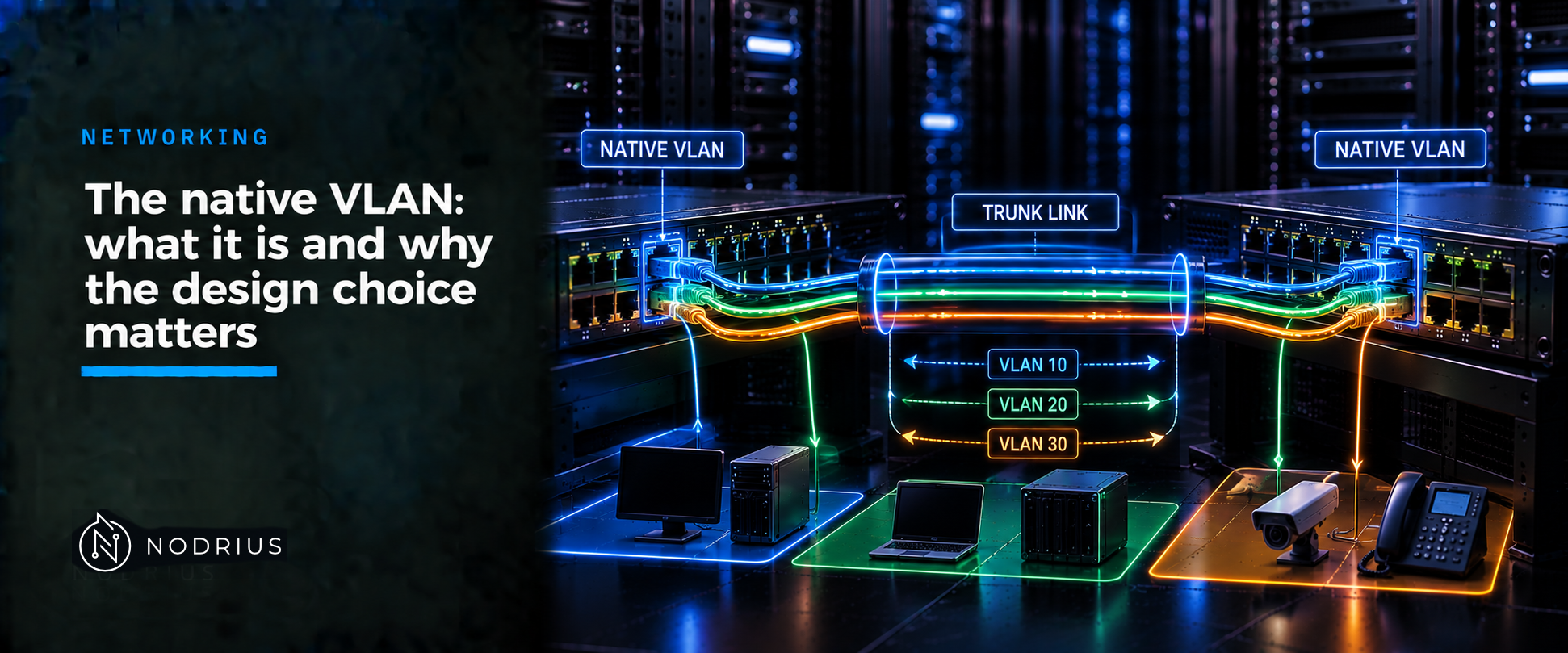
What the native VLAN means on an 802.1Q trunk, how untagged traffic is classified, and why the choice affects spanning tree and segmentation.
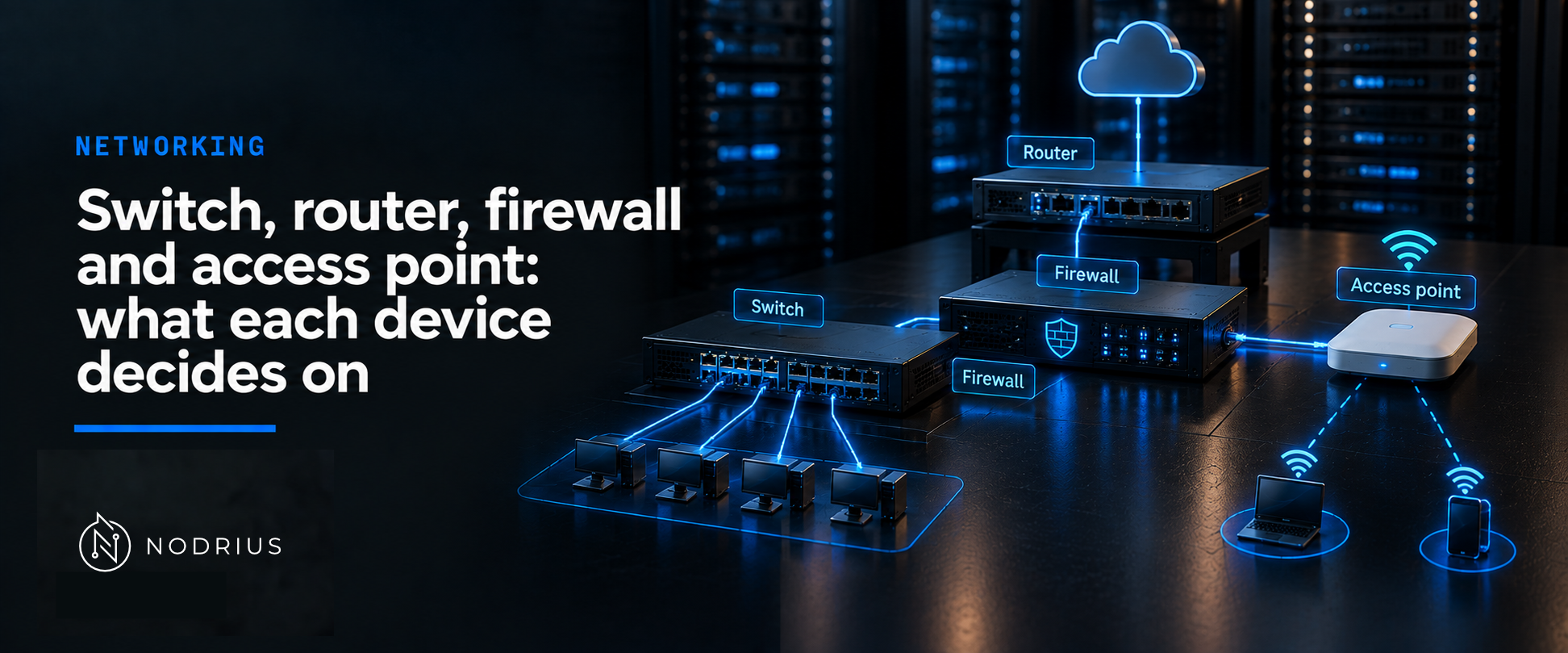
Four devices, four different decisions: the information each one uses, the scope it applies in, and why "which layer it is" is the wrong question.
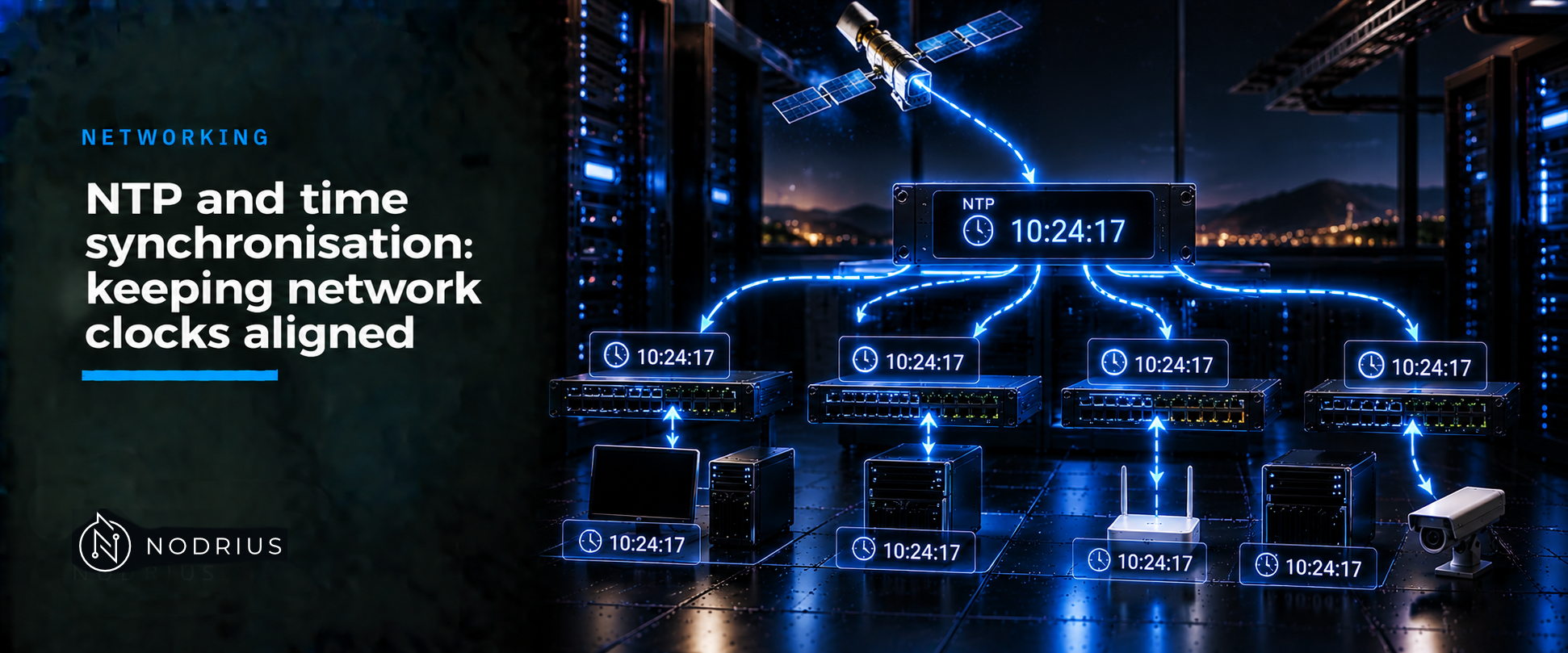
How NTP keeps network devices on the same clock - the server hierarchy, the round-trip measurement, and why unauthenticated time is a risk.
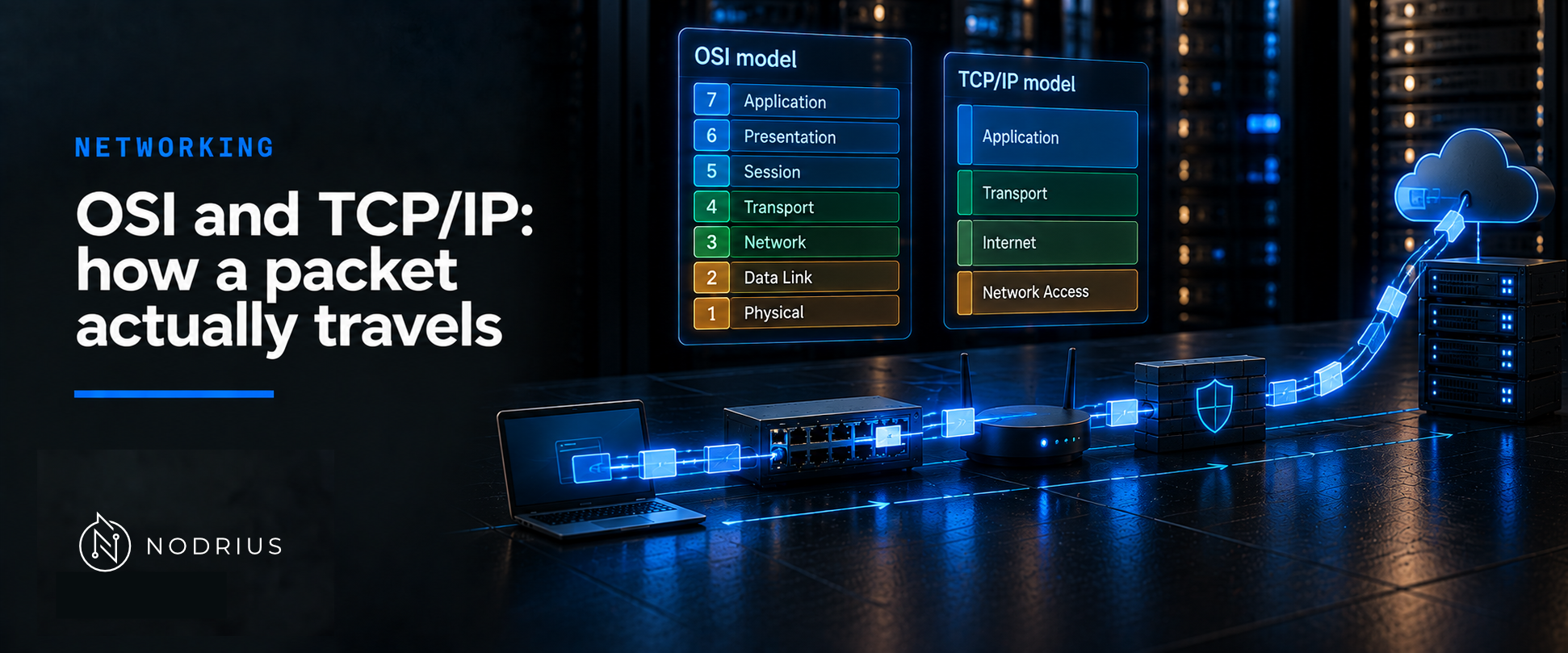
Why the layered models exist, what each layer adds to a packet, and where OSI and TCP/IP differ.
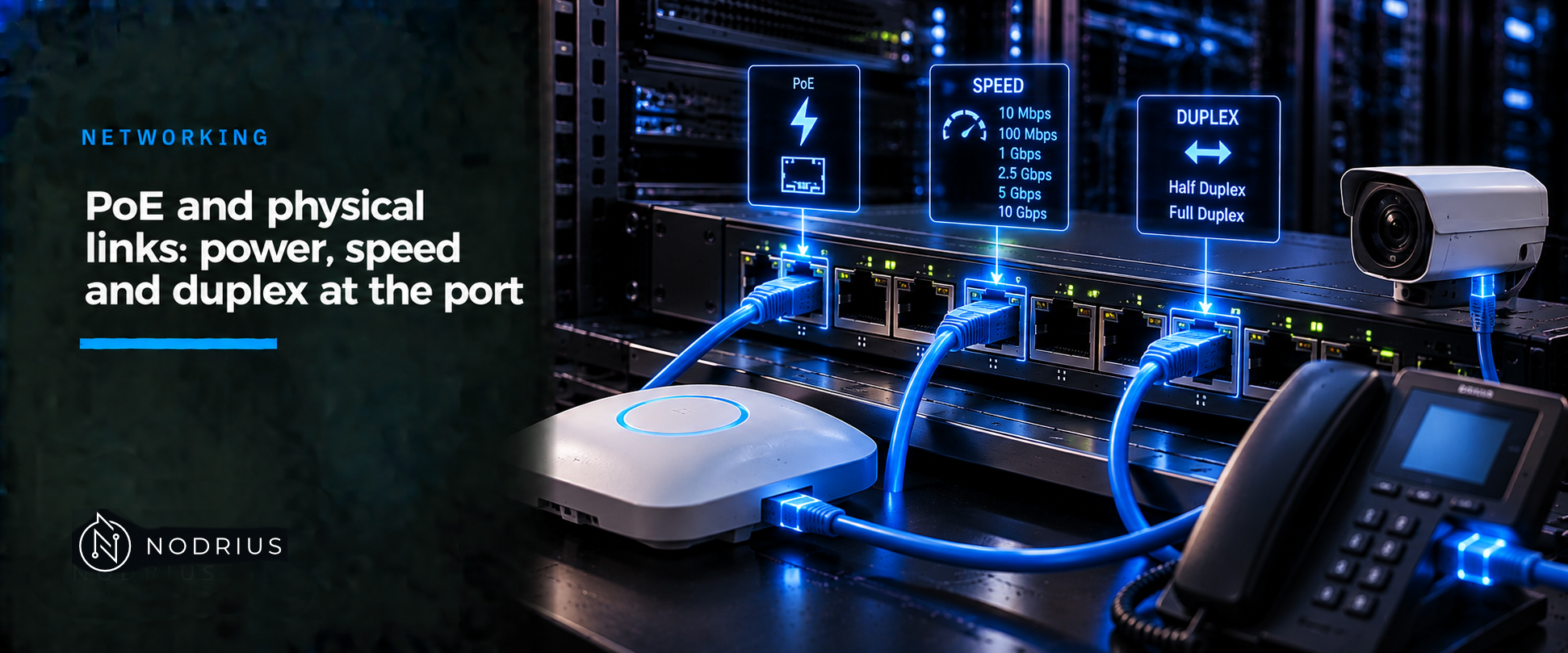
How a switch port powers a device over the cable (PoE) and how both ends agree on speed and duplex — and the Cisco IOS-XE commands used to inspect and control them.
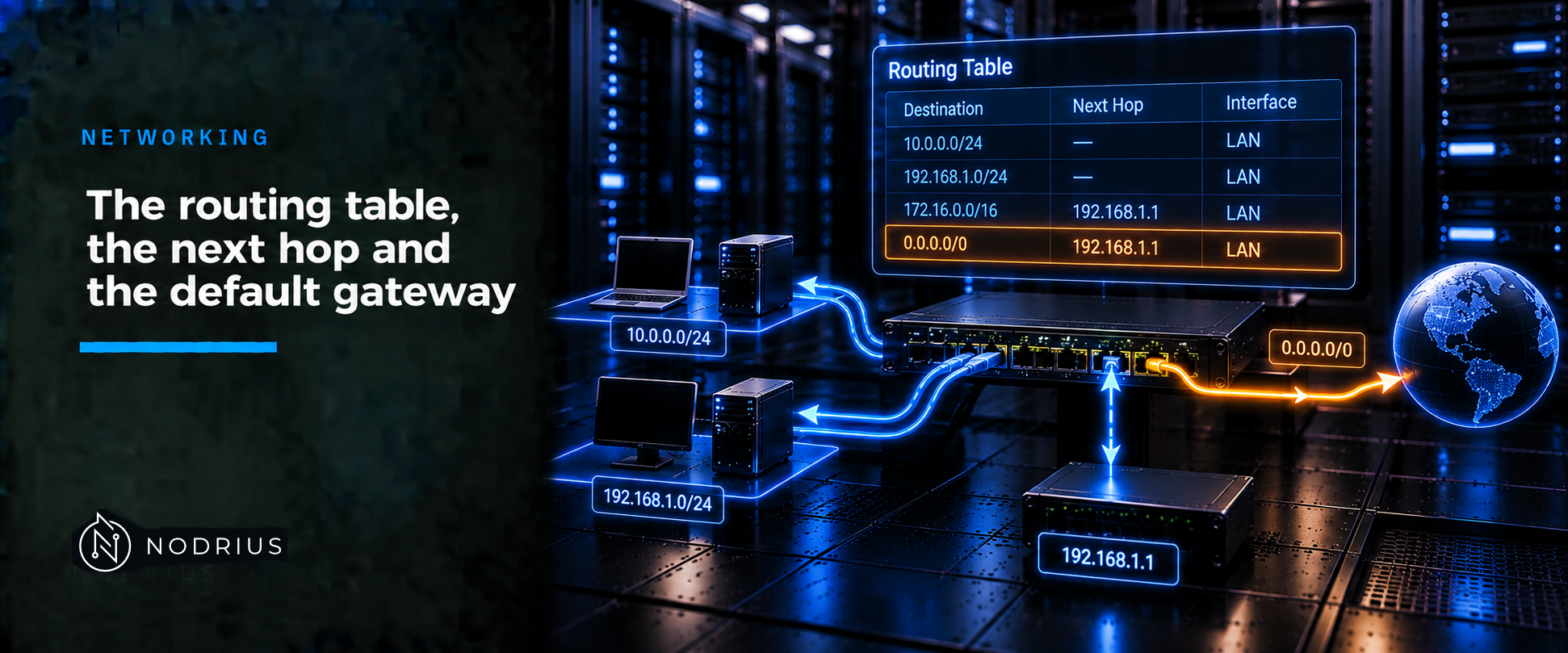
What a routing table entry contains, how a device picks the longest matching prefix and its next hop, and what the default gateway and the default route actually are.
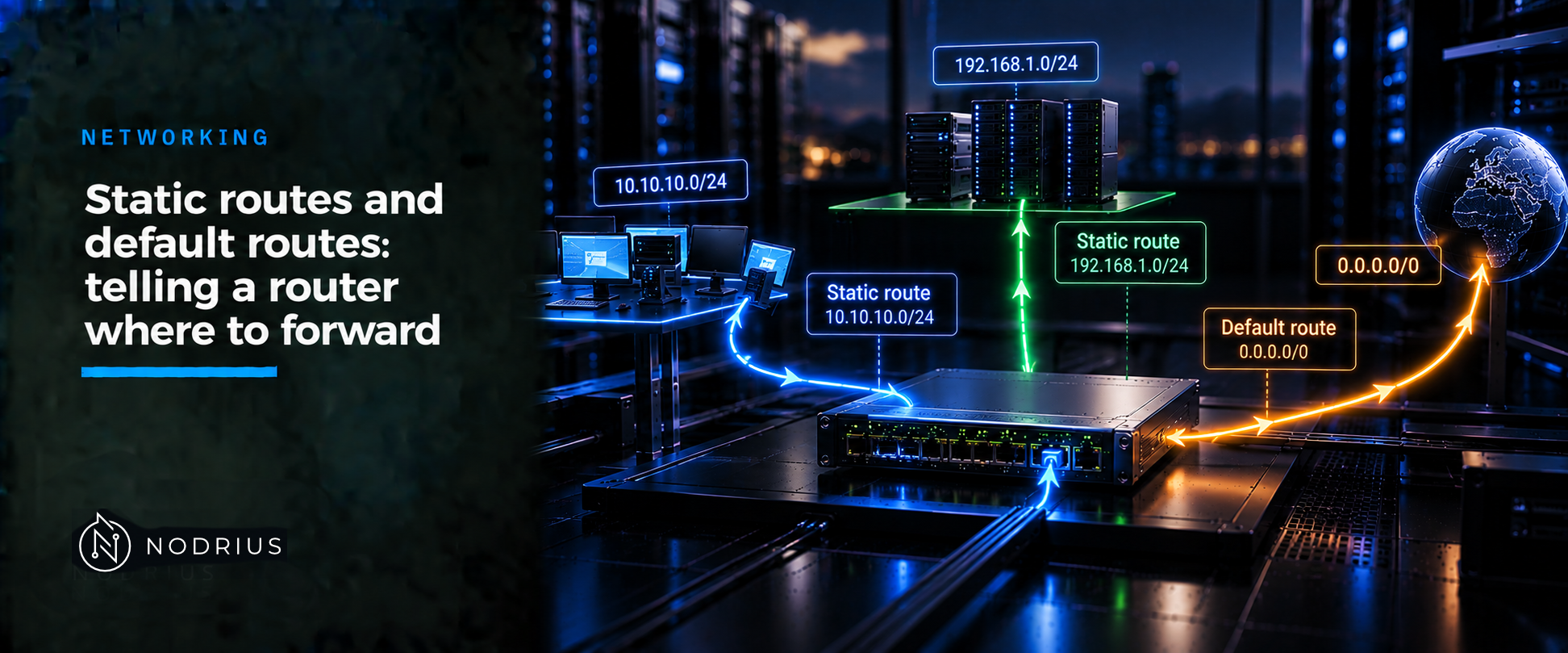
How a static route and a default route are written on Cisco IOS-XE, how the router chooses between routes, and when a manually configured route fails silently.
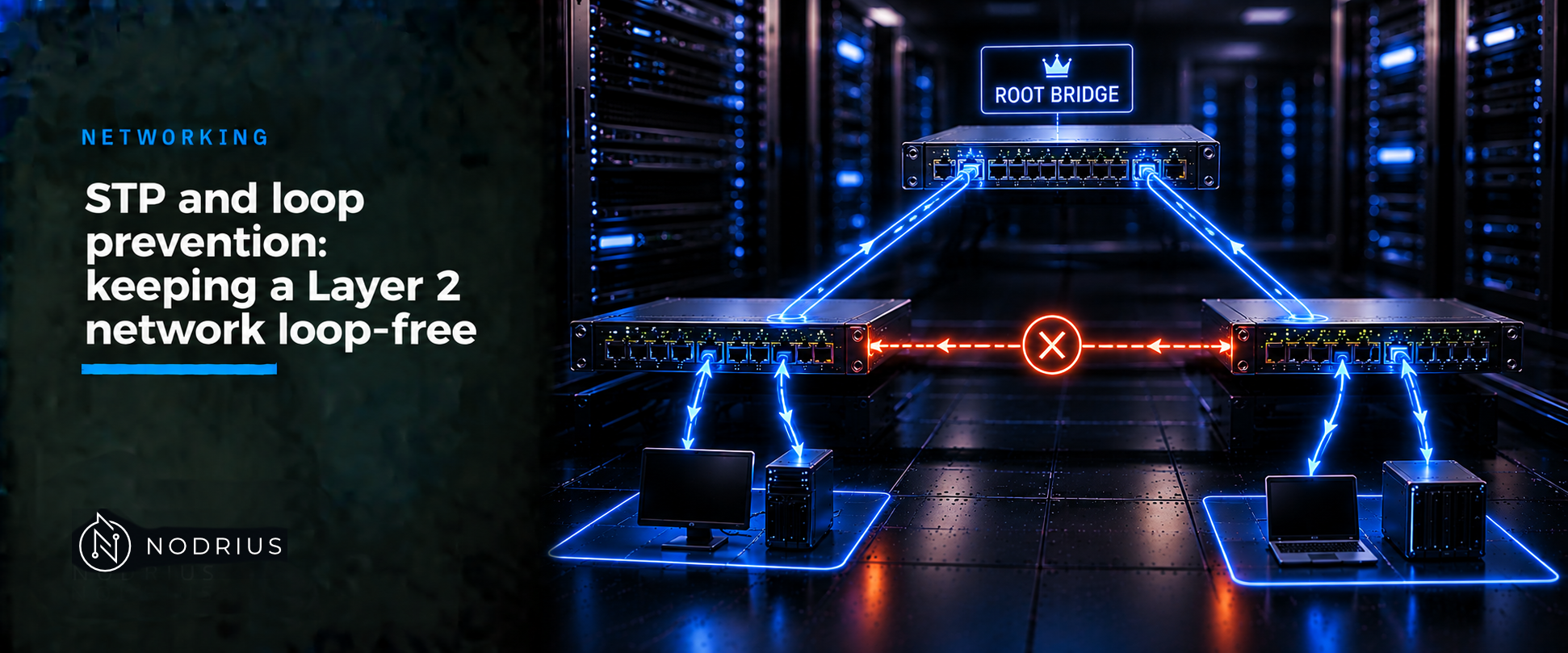
Why a Layer 2 loop becomes a broadcast storm, how STP elects a root and blocks the ports that would close a loop, and how to configure and verify it on Cisco IOS-XE.
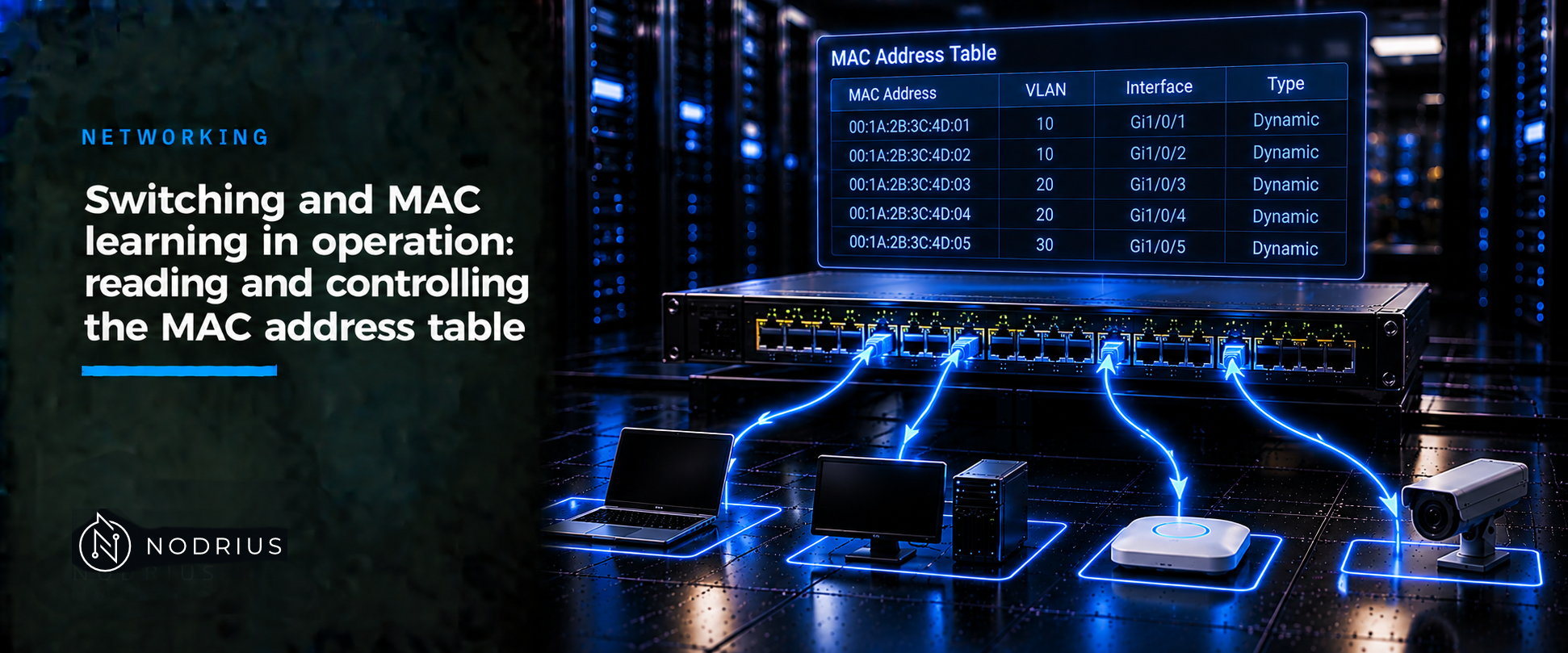
How a Cisco IOS-XE switch stores what it has learned, how to read, populate, age and clear the MAC address table, and what its entries actually tell you about a Layer 2 network.
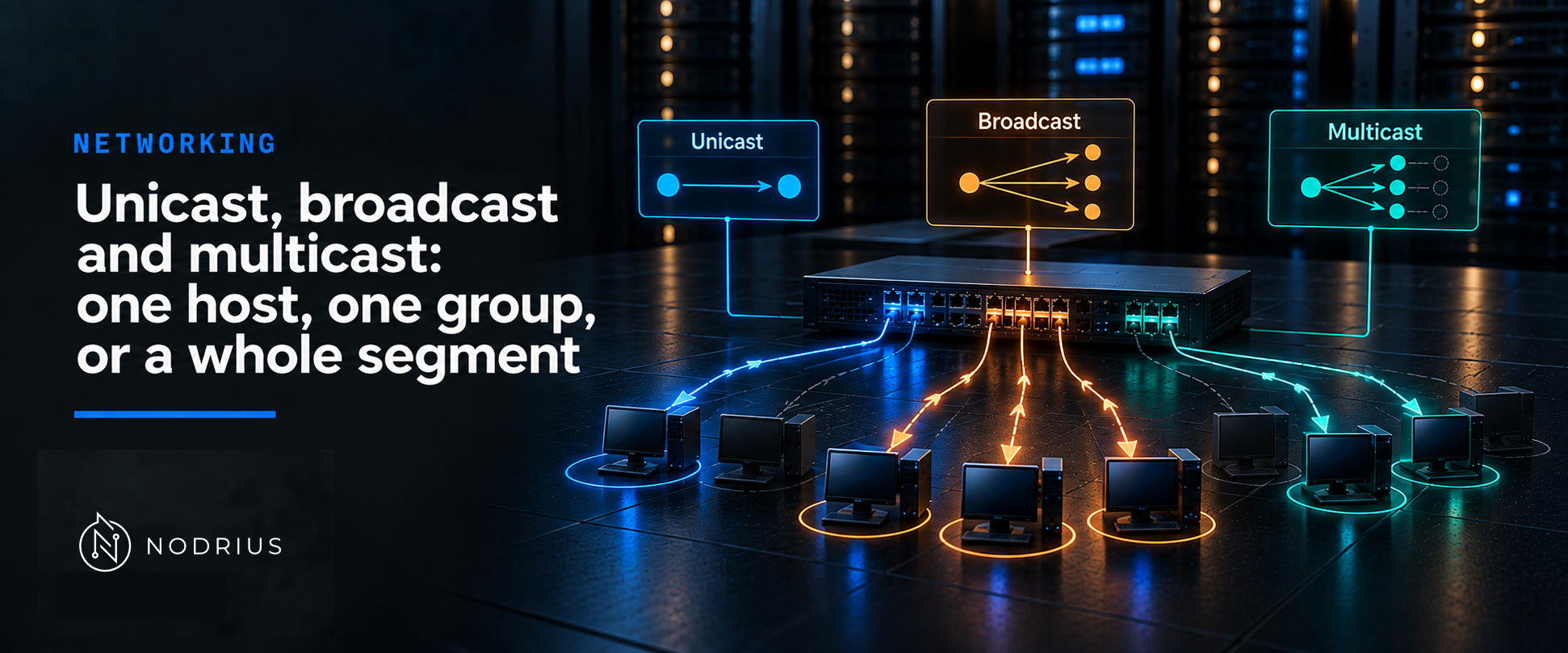
How unicast, broadcast and multicast address traffic, why IPv6 dropped broadcast, and why the size of a broadcast domain is an operational problem.
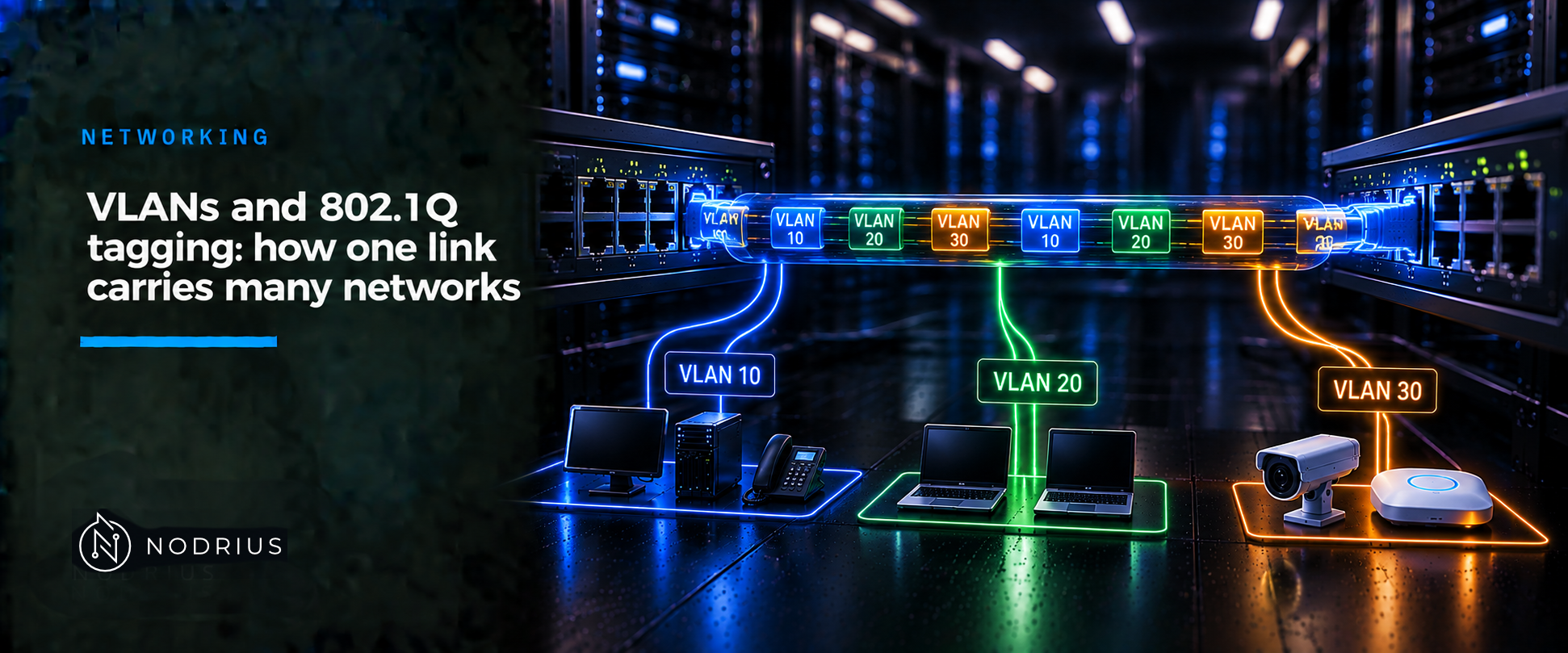
How IEEE 802.1Q lets a single link carry many VLANs — the 4-byte tag, access and trunk ports, and the native VLAN.